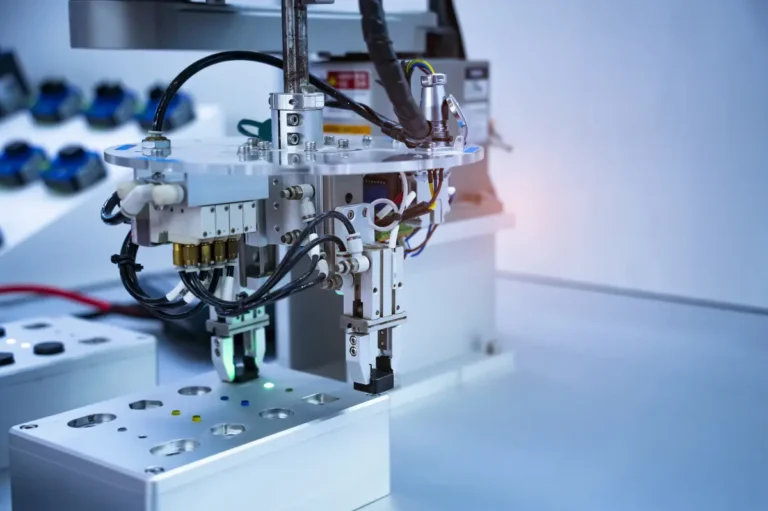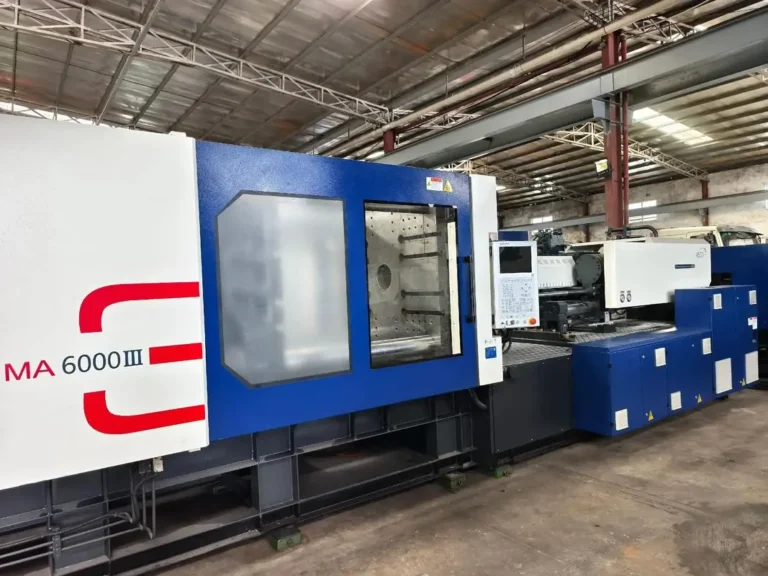
Injection molding utilizes a variety of different plastics, and selecting the appropriate plastic directly impacts part performance, cost, and production stability. In this blog post, we will focus on the most commonly used plastics in injection moulding, covering their characteristics, applications, selection guidelines and common selection mistakes. This will help you better choose the appropriate injection moulding material.
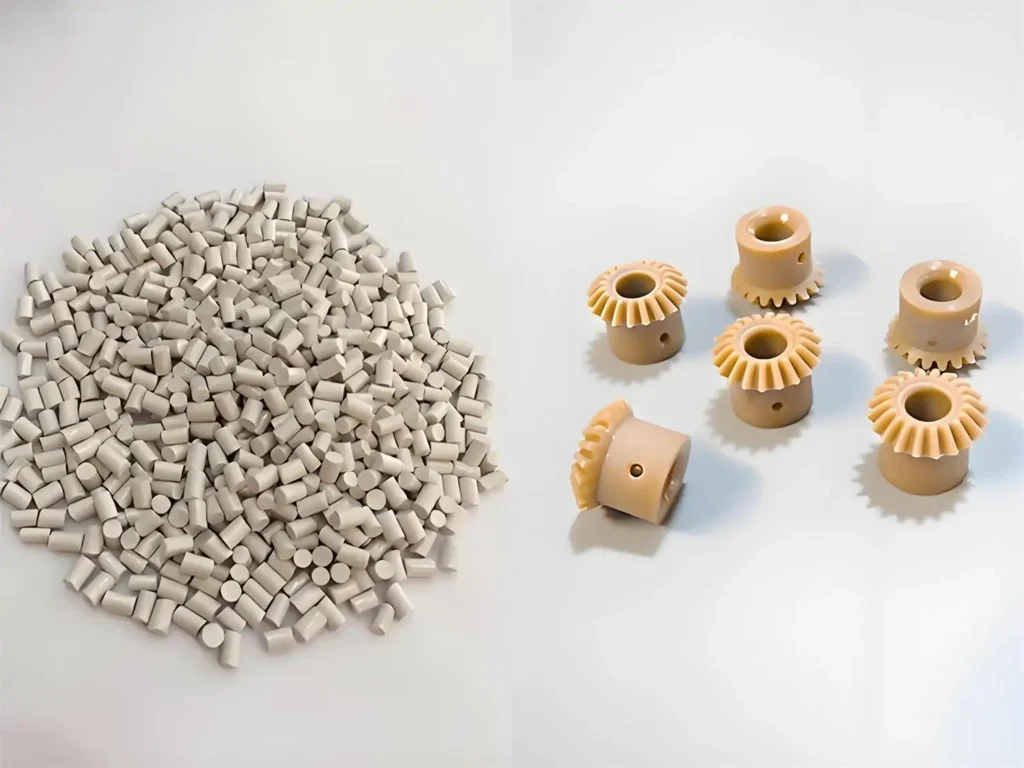
What is Injection Moulding?
Injection moulding is a manufacturing process that produces various parts by melting plastic or metal materials in an injection moulding machine, injecting the molten material into a mold cavity and cooling it to solidify. For a detailed explanation of injection molding definition, please refer to this article: What Is Injection Moulding
How Does Plastic Become a Part Through Injection Moulding Process?
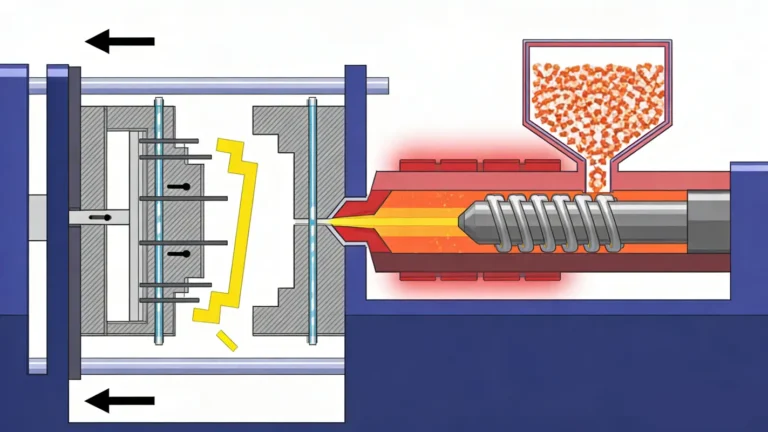
Plastic is heated and melted in the injection moulding machine, injected into the mold under flow conditions and finally cooled and solidified into a usable part. From a material perspective, this transformation depends on how the plastic behaves during each stage of the injection moulding cycle.
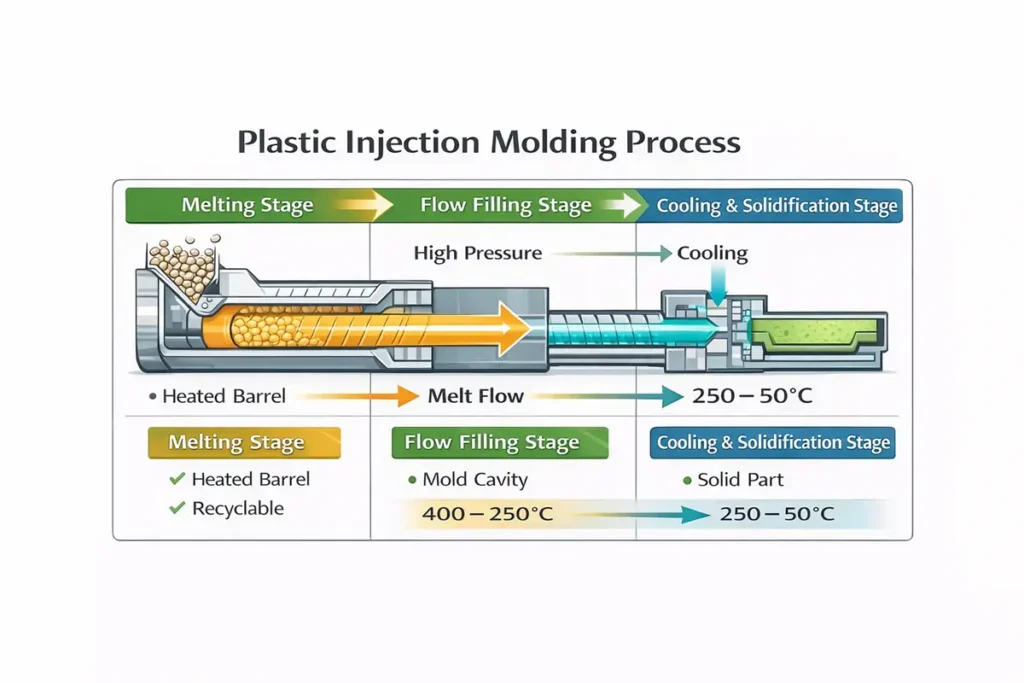
Melting Stage
During the melting stage, plastic pellets are heated until they melt. The key factors are the material’s melting temperature range, thermal stability, and whether it can be processed without degradation.
Flow Filling Stage
The liquid plastic is propelled by pressure into the mold cavity while in a flowing state, filling the void. The material’s ability of flow during this stage affects both mold filling and the feasibility of the mold design.
Cooling and Solidification Stage
During the cooling and setting process, molten plastic transforms into a solid state and ultimately sets. The shrinkage and crystallization characteristics of the material during this stage directly impact part precision, warping risk, and long-term stability.
How Can Injection Moulding Plastics Be Classified?
The classification of injection moulding plastics primarily relies on material properties and application performance.
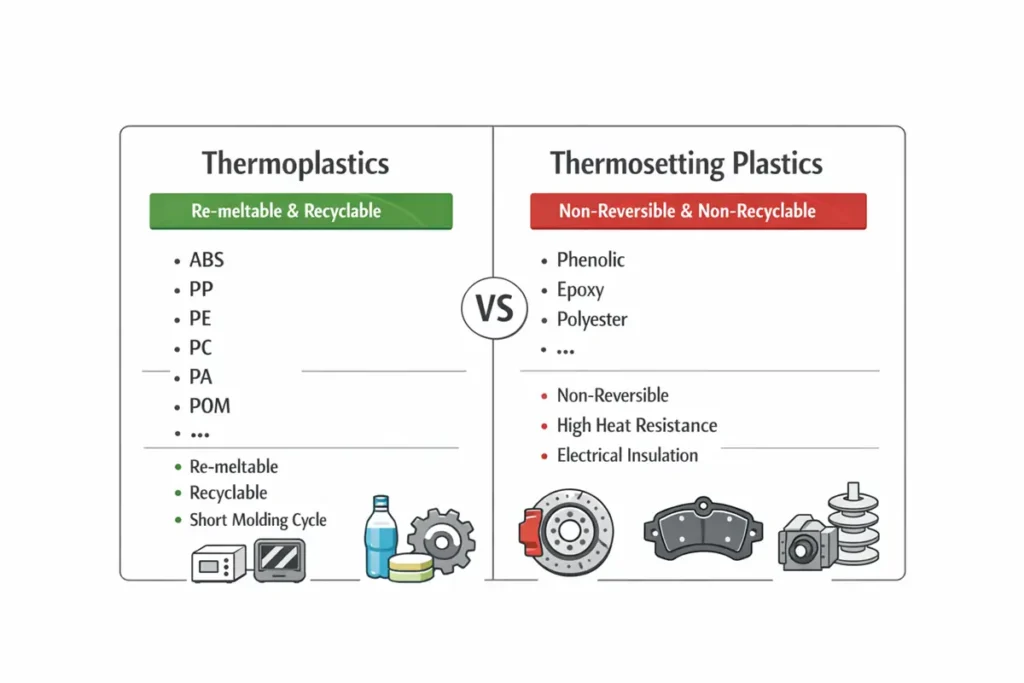
1. Classification by Material Properties
The classification of injection molding plastics primarily depends on material properties and application performance. Selection can be made based on different performance requirements. By adding color masterbatch, not only can the appearance of the material be enhanced, but the market competitiveness of the product can also be improved.
Thermoplastics
- Features: The process of heating to melt and cooling to solidify is reversible, allowing for repeated processing.
- Materials: ABS, PP, PE, PC, PA, POM, PMMA, PS
- Advantages: Waste material can be recycled; short moulding cycle
- Applications: Daily consumer goods, electronic enclosures, automotive components, etc.
Thermoplastics offer advantages such as recyclability, wide availability, and processing stability, making them dominant in high-volume injection molding and the material of choice for cost-sensitive and mass-production applications.
Thermosetting Plastics
- Features: Forms a three-dimensional network structure after heat curing, irreversible
- Materials: Phenolic resin, epoxy resin, unsaturated polyester
- Advantages: Requires strict control of curing temperature and time
- Applications: Electrical insulation components, automotive brake pads, high-temperature resistant parts
Thermosetting materials cannot be remelted after curing, so they are primarily used in applications where heat resistance, electrical insulation, or structural rigidity are critical.
2. Classification by Application Performance
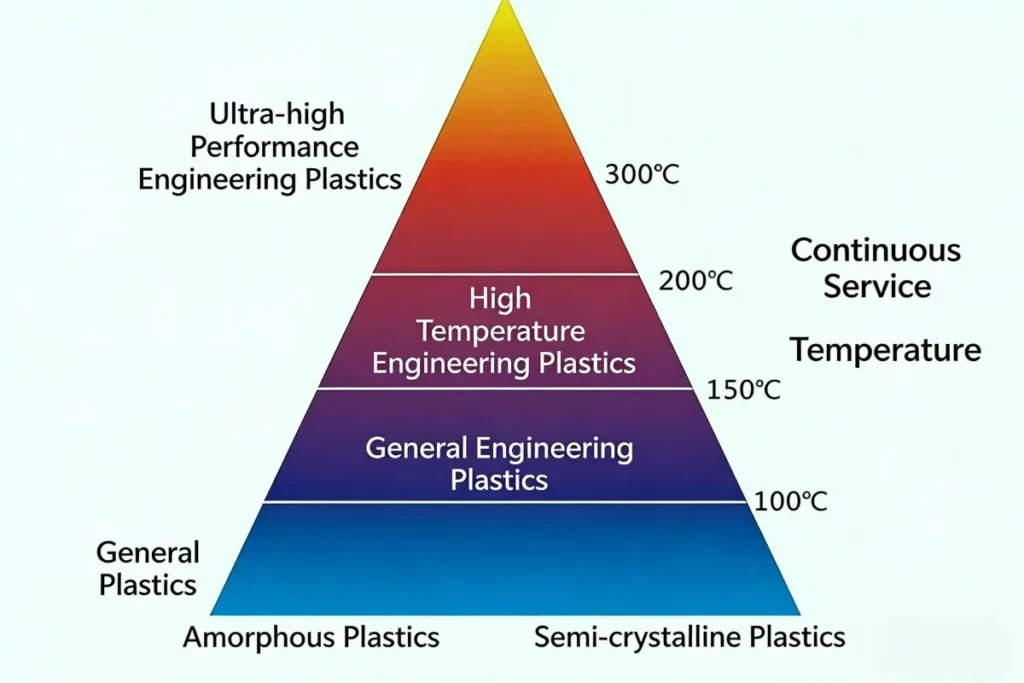
Based on mechanical properties and usage scenarios, plastics are categorized into general-purpose plastics, engineering plastics and specialty engineering plastics.
General-Purpose Plastics
- Features:Low cost, high production volume, good processability
- Representatives: PE, PP, PVC, PS
- Applications: Packaging materials, disposable items, toys, etc.
In practical applications, when material cost and processing efficiency are more important than part performance, general-purpose plastics are typically chosen.
Engineering Plastics
- Features:High strength, impact resistance, excellent temperature resistance
- Representative Examples: PA, PC, POM, PBT
- Applications: Gears, bearings, automotive components, electronic connectors
When general-purpose plastics fail to meet strength and wear resistance requirements, engineering plastics may be considered as alternatives for component materials. However, this approach also increases material and processing costs.
Specialty Engineering Plastics
- Features: High-temperature resistance, chemical corrosion resistance
- Representative Examples: PEEK, PI, PSU
- Applications: Aerospace components, medical implants, semiconductor equipment.
Special engineering plastics are only used under extreme operating conditions.
What Are the Commonly Used Plastic Materials in Injection Moulding?
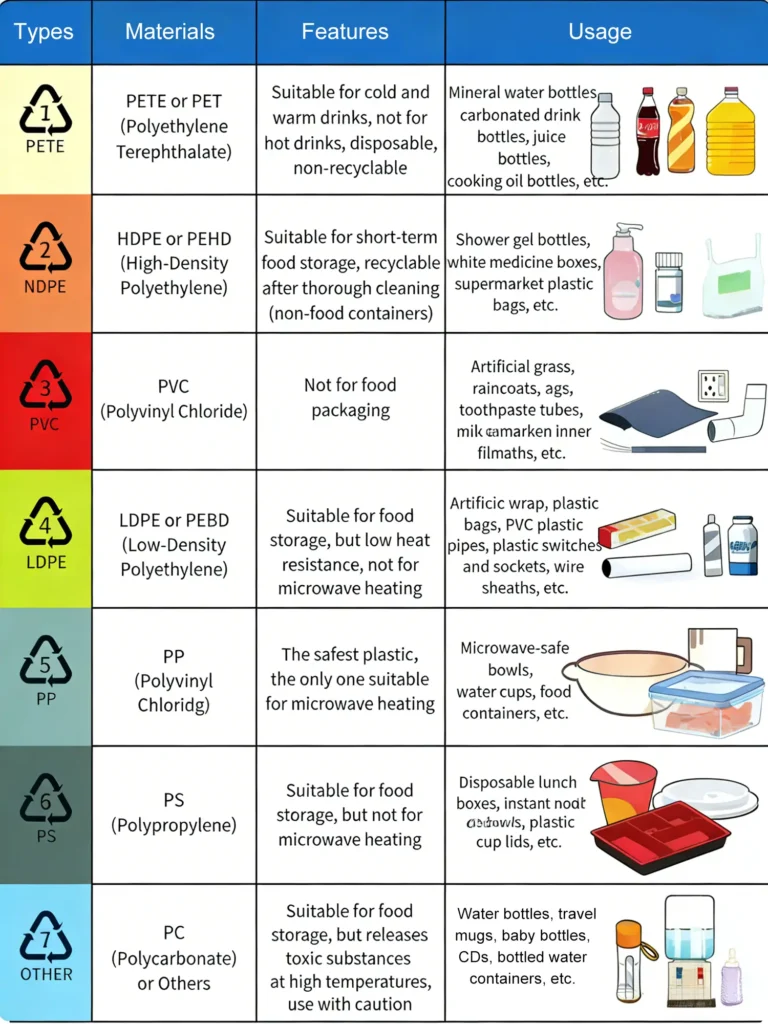
ABS
ABS is currently the most widely used engineering plastic in injection molding, typically serving as the default material for housings and structural components.
- Advantages: Excellent toughness, impact resistance, easy processing, surface finishability and high cost-effectiveness.
- Disadvantages: Poor UV resistance, average heat resistance and flammability.
- Applications: Appliance housings, automotive interiors, toys, luggage.
- Grades: General-purpose grades (e.g., Chimei PA-757), high-flow grades, flame-retardant grades (e.g., SABIC C series), electroplating grades.
- Leading Brands: Chimei, LG Chem, SABIC.
- Selection Guide: ABS is the preferred choice when balanced mechanical properties, good appearance, easy processing are required, especially for cost-sensitive applications and suitable for most structural parts not exposed to high temperatures or intense UV radiation.
PP
PP is a lightweight, low-cost general-purpose polyolefin plastic typically used when cost, chemical resistance, and lightweight design are key considerations.
- Advantages: Low density, chemical resistance, fatigue resistance, food contact safety, low cost.
- Disadvantages: High brittleness at low temperatures, insufficient rigidity, susceptibility to photooxidation, poor wear resistance.
- Applications: Automotive interior components, daily necessities, food packaging, medical devices.
- Grades: Homopolymer PP, Copolymer PP (high toughness), Glass-fiber reinforced PP.
- Leading brands: Borstar (NovaChem), LyondellBasell, Sinopec.
- Selection Guide: PP is suitable for products requiring lightweight construction, chemical resistance, or extremely low material costs. It is particularly well-suited for manufacturing containers, hinges and disposable items.
PE
PE is a general-purpose plastic with excellent chemical stability, classified by density into HDPE, LLDPE, etc.
- Advantages: Acid/alkali resistance, superior electrical insulation, non-toxic, good flexibility, low cost.
- Disadvantages: Low mechanical strength, poor dimensional stability, difficult to bond and print.
- Applications: Packaging films, hollow containers, piping systems, wire/cable jackets.
- Grades: Injection moulding grade HDPE, film grade LLDPE, rotomoulding grade.
- Leading brands: ExxonMobil, Dow Chemical, PetroChina.
- Selection guide: Choose PE when products demand exceptional chemical stability, require good flexibility, or necessitate minimal cost—e.g., various packaging, storage tanks and piping.
PC
PC is an engineering plastic renowned for its high transparency and exceptional impact resistance. Despite its higher cost, PC material remains the optimal choice when ABS or PMMA fail to meet the required impact strength or transparency standards.
- Advantages: Superior impact resistance, high light transmission, excellent heat resistance, flame retardancy.
- Disadvantages: Prone to stress cracking, susceptible to scratches, notch sensitivity, relatively high cost.
- Applications: Optical lenses, automotive window glass, electronic device housings, protective visors.
- Grades: General transparent grade, high flow grade, glass fiber reinforced grade, food grade.
- Leading brands: Covestro, SABIC, Mitsubishi Engineering Plastics.
- Selection guide: PC is suitable when parts require high transparency and impact resistance or need higher heat resistance than ABS. Commonly used in transparent housings, protective components and lighting assemblies.
PA
PA is a high-strength, high-wear-resistant semi-crystalline engineering plastic primarily used for functional components subjected to load-bearing or friction.
- Advantages: High mechanical strength, wear resistance with self-lubrication, excellent oil resistance and heat resistance.
- Disadvantages: High moisture absorption affecting dimensional stability and electrical properties; brittle in dry state.
- Applications: Gears, bearings, automotive engine peripherals, sports equipment, electrical terminals.
- Grades: PA6, PA66, Glass-Filled Grade (e.g., PA6-GF30), Hydrolysis-Resistant Grade.
- Leading brands: DuPont (Zytel), BASF (Ultramid), EMS.
- Selection guide: Consider PA for components subjected to prolonged friction, high loads, or elevated temperatures (e.g., automotive engine compartments), as its wear resistance and strength significantly exceed most general-purpose plastics.
POM
POM is a plastic material characterized by high rigidity and dimensional stability, commonly used in precision mechanical components where dimensional stability and low friction are prioritized over toughness or surface aesthetics.
- Advantages: Exceptionally high rigidity and hardness, dimensional stability, wear resistance, low friction coefficient.
- Disadvantages: Poor thermal stability during processing, intolerant to strong acids, moderate toughness, prone to thermal decomposition.
- Applications: Precision gears, bearings, automotive door locks, sprinkler components, zippers.
- Grades: Homopolymer POM, copolymer POM.
- Leading brands: DuPont, Polyplastics, BASF.
- Selection Guide: POM is suitable for manufacturing high-precision, high-rigidity, low-friction precision mechanical components with continuous motion.
PS
PS is a colorless, transparent thermoplastic plastic, including transparent, brittle GPPS and impact-modified HIPS.
- Advantages: High transparency, good rigidity, extremely low cost, easy to process and mold.
- Disadvantages: High brittleness, poor heat resistance, prone to stress cracking.
- Applications: Food packaging, CD cases, appliance liners, foam insulation materials.
- Grades: GPPS, HIPS, flame-retardant HIPS.
- Well-known Brands: Chi Mei, INEOS Styrolution, Formosa Plastics.
- Selection Guide: PS is the preferred choice for disposable items, packaging, or liners where cost is paramount and high toughness is not required.
PMMA
PMMA is an optical plastic with exceptional transparency and weather resistance.
- Advantages: Extremely high light transmittance, high surface hardness, excellent aging resistance.
- Disadvantages: Poor impact resistance, high brittleness, poor solvent resistance.
- Applications: Optical lenses, advertising light boxes, automotive tail lamp covers, sanitary ware.
- Grades: Injection moulding grade, extrusion grade, impact-modified grade.
- Leading brands: Mitsubishi Chemical, Rohm, Chi Mei.
- Selection Guide: PMMA is typically chosen when optical transparency, surface gloss and outdoor weather resistance are core requirements.
PVC
PVC is a versatile plastic whose solid hardness can be adjusted via plasticizers.
- Advantages: Good flame retardancy, corrosion resistance, electrical insulation, low cost.
- Disadvantages: Poor thermal stability, low heat resistance, relatively low toughness.
- Applications: Building material pipes, door/window profiles, wire insulation, artificial leather.
- Grades: Suspension-grade general-purpose resin, differentiated by plasticizer content for softness/hardness.
- Leading brands: Shin-Etsu Chemical, Formosa Plastics.
- Selection Guide: PVC is primarily used in construction materials like profiles and pipes, as well as flexible products such as cables and synthetic leather, where its flame retardancy and corrosion resistance are particularly advantageous.
TPU
TPU is an elastomeric plastic with outstanding abrasion resistance, exhibiting properties close to rubber.
- Advantages: Exceptional abrasion resistance, high elasticity, tear resistance, oil resistance, wide hardness range.
- Disadvantages: Prone to moisture absorption, limited long-term heat resistance.
- Applications: Footwear materials, phone cases, industrial rollers, hoses, films.
- Grades: Oil-resistant polyester type, hydrolyzation-resistant polyether type, injection moulding grade.
- Well-known Brands: BASF, Lubrizol, Huntsman.
- Selection Guide: Choose TPU as the material when parts require rubber-like elasticity and abrasion resistance while demanding efficient thermoplastic processing.
TPE
TPE is a versatile thermoplastic elastomer offering a soft tactile feel.
- Advantages: Soft touch, bondable for overmoulding, eco-friendly and non-toxic, easy to color.
- Disadvantages: Generally lower mechanical strength, abrasion resistance and temperature resistance compared to TPU.
- Applications: Overmoulding tool handles, grips for daily-use products, toys, sealing strips.
- Grades: Overmoulding grade, general injection moulding grade.
- Leading brands: Kibara Kobo, Lee Chang Rong, Mitsubishi Chemical.
- Selection Guide: When the primary requirements for a part are a comfortable soft touch, environmental friendliness, or simple secondary overmoulding and mechanical performance demands are low, TPE offers a cost-effective solution.
PET
PET is a high-strength polyester commonly used in fibers, bottle preforms and reinforced engineering plastics.
- Advantages: High strength, high rigidity, heat resistance, excellent gas barrier properties, low moisture absorption.
- Disadvantages: Slow crystallization rate, high brittleness when unreinforced.
- Applications: Beverage bottles, packaging films, engineering plastic components.
- Grades: Bottle-grade, film-grade, engineering-grade.
- Leading brands: DuPont, Samsung, Yuanfang.
- Selection Guide: Non-reinforced PET for high-barrier packaging; reinforced PET for electronic/electrical and automotive components requiring high rigidity, low warpage and heat resistance.
PBT
PBT is an easy-to-process polyester engineering plastic with excellent electrical properties.
- Advantages: Superior electrical insulation, heat resistance, chemical resistance, dimensional stability, fast moulding.
- Disadvantages: Poor toughness in unreinforced form, intolerant to strong acids/alkalis, susceptible to thermal hydrolysis.
- Applications: Electronic connectors, switches, automotive lighting, motor components.
- Grades: Unreinforced grade, glass fiber or flame-retardant reinforced grades.
- Well-known Brands: BASF, Polyplastics, Changchun Chemical.
- Selection Guide: When plastic products serve as electronic/electrical components in high-temperature/humidity environments, choose PBT for its balanced thermal resistance, electrical properties and processing stability.
PEEK
PEEK is a specialty engineering plastic with high-temperature resistance and outstanding mechanical properties. It is rarely used due to its high cost and demanding processing requirements.
- Advantages: Long-term high-temperature endurance, high mechanical property retention, chemical corrosion resistance, flame retardancy.
- Disadvantages: Extremely high cost, high processing temperatures, elevated raw material expenses.
- Applications: Aerospace components, high-end medical implants, semiconductor equipment parts, petrochemical valves.
- Grades: Unfilled grade, glass fiber or carbon fiber reinforced grades.
- Well-known Brands: Victrex, Solvay, Evonik.
- Selection Guide: PEEK should only be selected when components must operate long-term in extreme environments—such as sustained high temperatures, strong corrosion, or heavy loads—and performance requirements far outweigh cost considerations.
PPS
PPS is a specialty plastic characterized by high heat resistance, dimensional stability, and excellent flame retardancy, and is generally regarded as a premium material that surpasses standard injection-molded parts.
- Advantages: Excellent thermal stability, dimensional stability, low warpage, inherent V-0 flame retardancy, chemical resistance.
- Disadvantages: High brittleness, high cost, weak weld line strength.
- Applications: Automotive heat-resistant components like impellers, sensors, SMT electronic connectors, chemical pumps and valves.
- Grades: Glass fiber or mineral-filled reinforced grades.
- Leading brands: Polyplastics, Toray, Xinhuacheng.
- Selection Guide: PPS offers high cost-effectiveness when extremely high heat resistance, minimal moulding warpage and superior flame retardancy are required for thin-walled precision electronics or high-temperature automotive parts.
What are the Limitations of Injection Moulding Materials?
Currently, injection moulding materials still have certain limitations. For example, significant differences exist in the melt flow properties of various materials after melting. Some plastics exhibit large and unstable cooling shrinkage rates. Once molds are manufactured, the injection moulding material cannot be easily changed. Selecting suitable materials also requires consideration of multiple factors.
Significant Differences in Melt Flow Properties
The varying flow properties of different plastics impose distinct demands on the injection moulding process. Materials with poor flow require higher injection pressure and temperature to fully fill the mold cavity, otherwise defects like short shots may occur. Conversely, materials with excessively high flow tend to overflow or produce flash under high pressure, increasing processing costs.
High and Unstable Shrinkage Rates
Many plastics undergo shrinkage during cooling, with shrinkage rates influenced by material formulation, additives, crystalline structure and process conditions. Excessive shrinkage makes precision parts difficult to produce parts difficult to produce, leading to dimensional deviations. Uneven shrinkage may also cause defects like warping and deformation.
Mold Design Cannot Be Easily Modified After Production
Molds are designed and manufactured based on comprehensive considerations of raw material flow, shrinkage rate and product requirements. Easily changing to unsuitable materials after mold production can cause product defects, incur additional costs, or even damage the mold.
What Are Common Material Selection Errors?
Common injection moulding material selection errors typically stem from misjudgments regarding product functionality, usage environment, or processing techniques. Examples include:
- Neglecting material environmental adaptability
- Confusing plastic types with their intended applications
- Overlooking critical performance parameters
- Violating industry compliance standards
- Incorrectly matching mechanical property requirements
- Failing to account for processing limitations
These errors may lead to product failure, increased costs, or even safety hazards.
Conclusion
In summary, common plastic types used in injection moulding include ABS, PP, PE, PC, PA, POM, PS, PMMA, PVC, TPU, TPE, PET, PBT, PEEK and PPS. The choice of injection moulding material plays a decisive role in determining part performance, production stability and overall manufacturing costs. Factors such as melt behavior, flow, cooling characteristics and shrinkage rate directly impact whether a design can be produced stably at scale.
Successful injection moulding does not focus solely on individual material properties but requires balancing mechanical performance, environmental resistance, appearance and production volume. If you are unsure how to select the appropriate material, please contact us. We offer comprehensive injection moulding services, covering mold design, material selection, mold fabrication and product manufacturing.