ABS is a highly formable engineering plastic with a wide range of applications, favored by global manufacturers sourcing components from Asia and other mature manufacturing regions. For manufacturers, engineers, and procurement managers, understanding the use of ABS in injection moulding can enhance product quality, optimize production efficiency, and help businesses achieve long-term development goals. This guide shows can ABS plastic be injection molded, the advantages of ABS injection moulding, common grades, technical processes, and application fields to empower you to make informed decisions and enhance production competitiveness.
What is ABS Plastic?
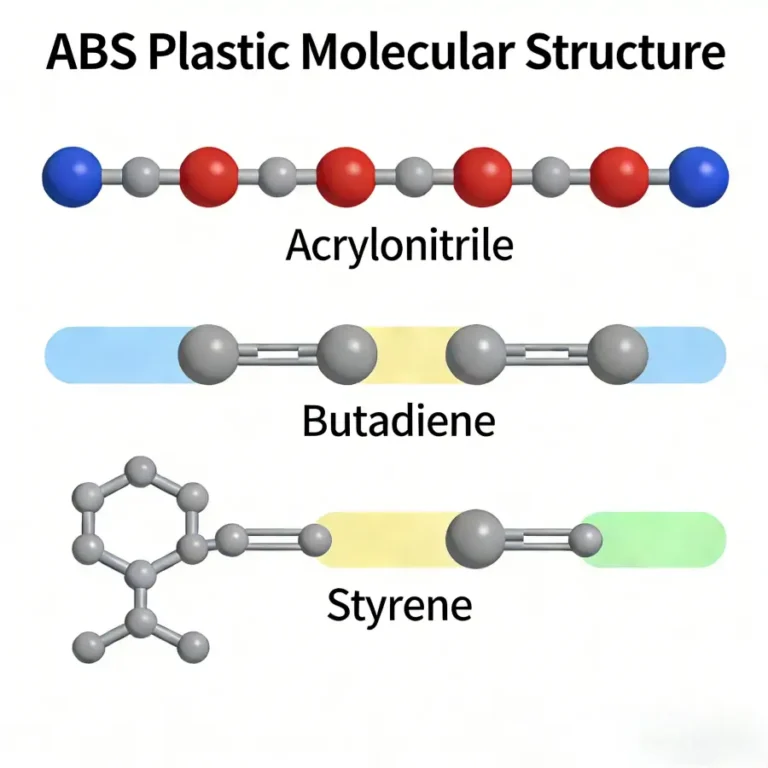
ABS is a thermoplastic engineering plastic with outstanding comprehensive properties. It is a copolymer of three monomers—acrylonitrile, butadiene, and styrene—offering excellent mechanical strength, impact resistance, and processability, making it suitable for various injection moulding applications.
Primary Components
A (Acrylonitrile): Provides excellent chemical resistance and thermal stability.
B (Butadiene): Imparts superior toughness and impact resistance to ABS.
S (Styrene): Delivers outstanding surface gloss and processability.
Why Choose ABS for Injection Moulding?
ABS offers excellent mechanical properties, outstanding machinability, broad environmental adaptability, diverse applications, and cost-effectiveness. It is well-suited for high-volume production in injection moulding while ensuring consistent quality for products exported overseas.
Characteristics and Advantages of ABS Plastic:
1. Superior Mechanical Properties
ABS offers high impact resistance, high strength, dimensional stability, wear resistance, and fatigue resistance. It exhibits low brittleness at low temperatures, low shrinkage, and minimal post-processing deformation, making it suitable for precision components under moderate loads and rotational speeds.
2. Excellent Processability
ABS plastic is easy to form and can be processed through various techniques. It is insensitive to temperature fluctuations, facilitating processing, and its high surface gloss enhances product aesthetics.
3. Broad Environmental Adaptability
ABS exhibits excellent chemical resistance, electrical insulation, and a wide temperature tolerance. It resists alkalis and various acids, remains stable under low humidity conditions, and maintains consistent performance.
4. Diverse Application Fields
With its balanced properties, ABS is widely used in automotive manufacturing, electronics, home appliances, medical equipment, daily necessities, and toys.
5. Cost-Effective and Practical
Compared to other engineering plastics, ABS offers relatively lower pricing, high cost-effectiveness, and performance sufficient to meet most requirements.
If you want to know more about the injection molding process, please click on this article: What are the 5 Steps of Injection Molding?
ABS Injection Moulding Process
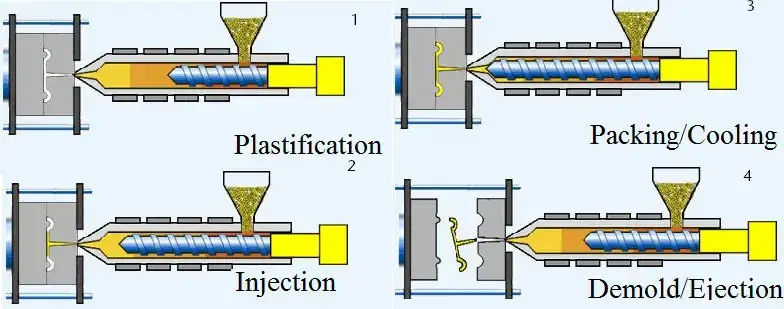
Process Flow
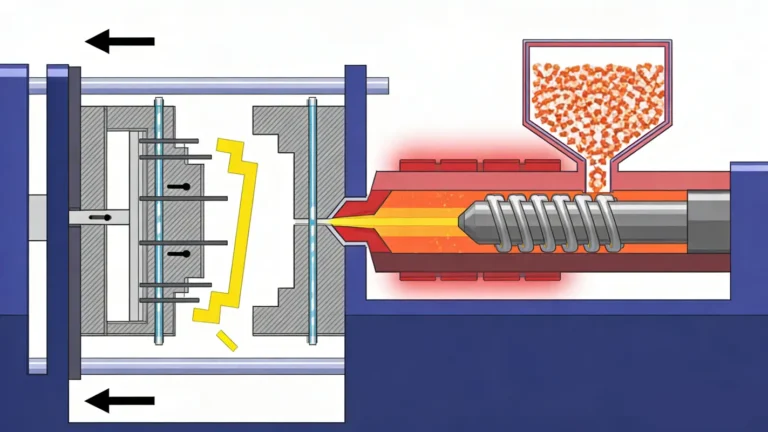
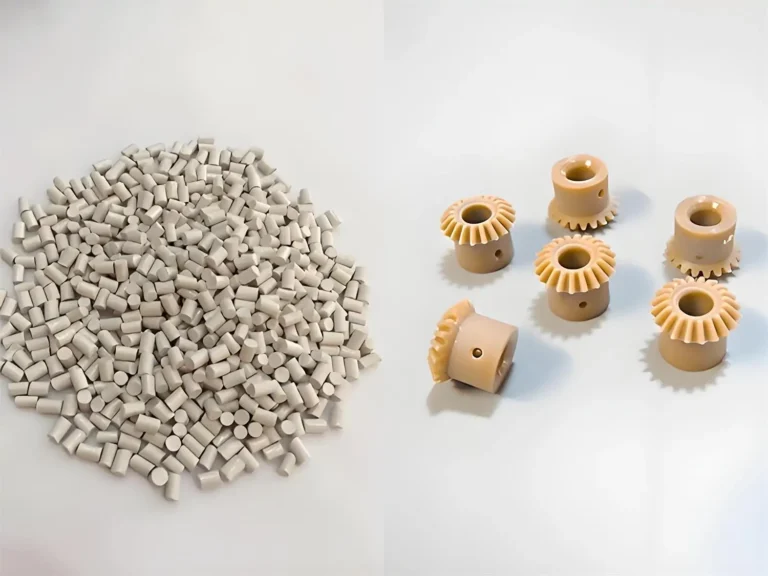
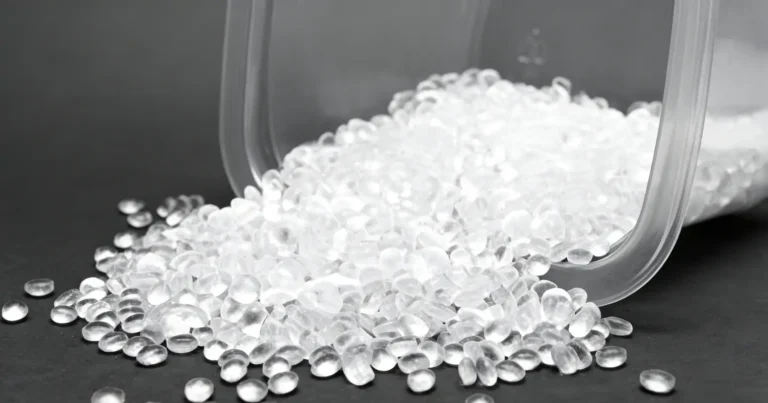
Material Feeding: Load ABS pellets into the injection moulding machine.
Heating and Melting: Melt ABS pellets into a fluid state through heating.
Injection: Inject molten ABS into the mold under high pressure.
Cooling and Demoulding: ABS solidifies within the mold, then the molded part is ejected mechanically.
Technical Considerations
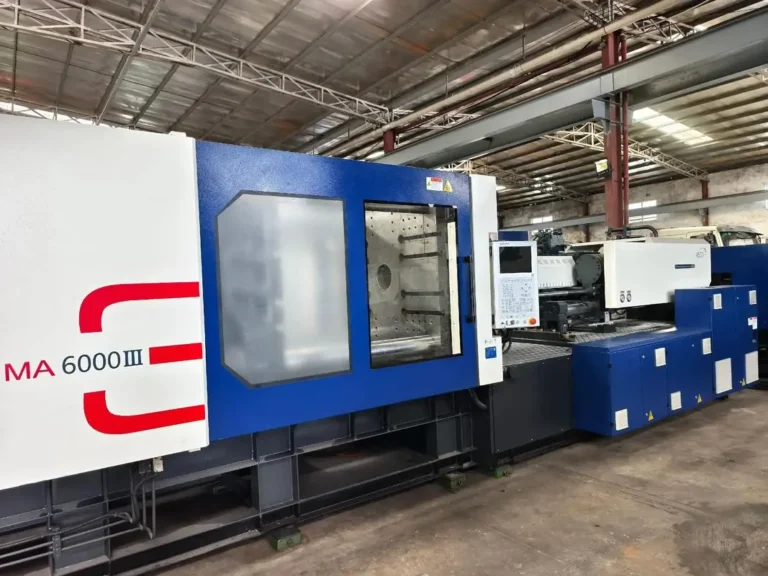
Injection Moulding Machine Selection: Choose an injection moulding machine with appropriate tonnage based on the complexity and volume of the required part.
Temperature Control: Temperature is critical for part quality in injection moulding. ABS typically has a melting temperature range of 220-250°C.
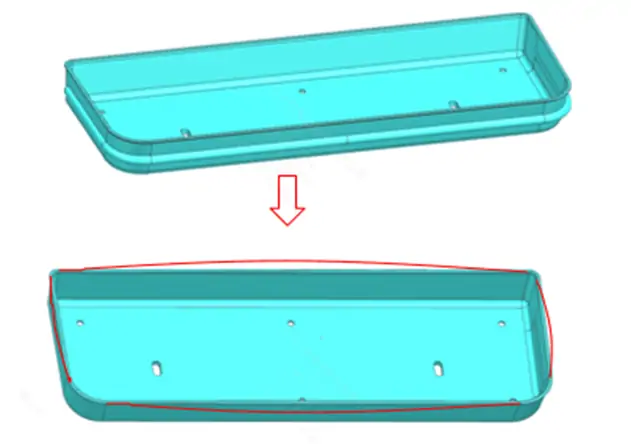
Cooling Time: Ensure sufficient cooling time to allow the part to cool completely, preventing warping and uneven shrinkage.
Plastic products warping 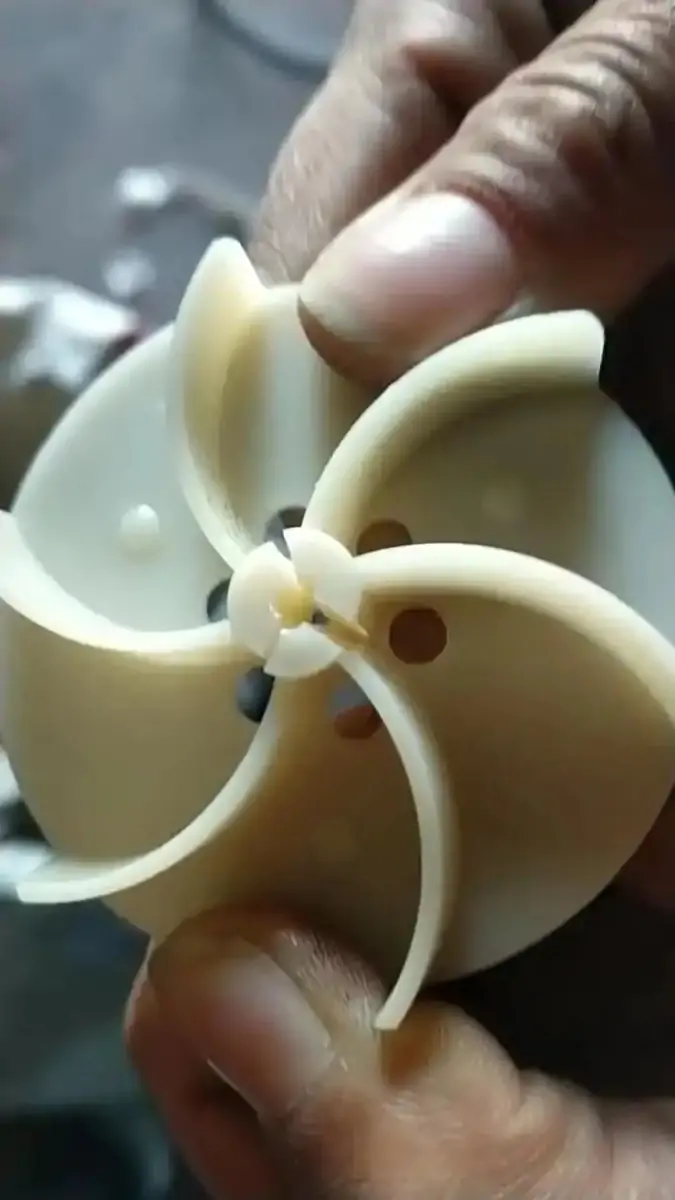
Cracking of injection molded products
Common Defects in ABS Injection Moulding
Inherent Material Defects
1. Poor Weather Resistance:
ABS plastic is not UV-resistant and tends to age and discolor under ultraviolet exposure, leading to diminished mechanical properties.
2. Limited Heat Resistance:
ABS generally cannot withstand prolonged use above 80-90°C (176-192°F), tending to deform or degrade in high-temperature environments.
3. Insufficient Chemical Stability:
Sensitive to certain organic solvents, which may cause stress cracking or surface whitening upon contact.
Moulding Process Challenges
1. Sensitive Process Parameters:
Temperature: Requires high precision in temperature control.
Pressure: Excessive pressure causes flash; insufficient pressure leads to shrinkage.
Injection Speed: Excessive speed causes weld lines; insufficient speed hinders mold filling.
2. Common Defects:
Silver Streaks: Caused by moisture or gas in the material.
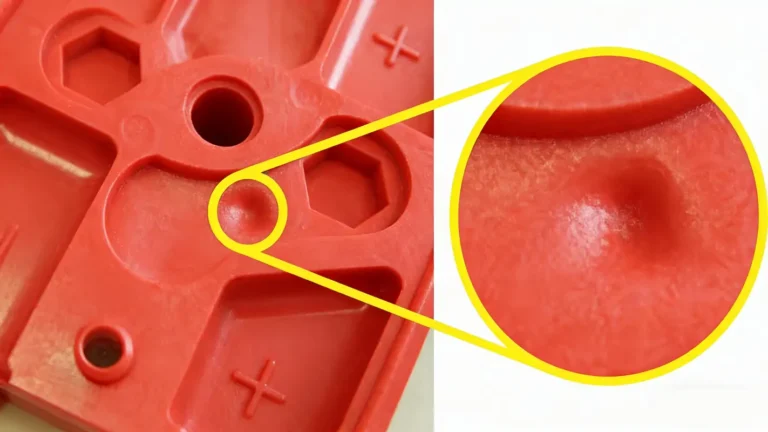
Sink Marks: Result from insufficient holding pressure during injection moulding.
Warpage: Occurs due to uneven cooling during solidification.
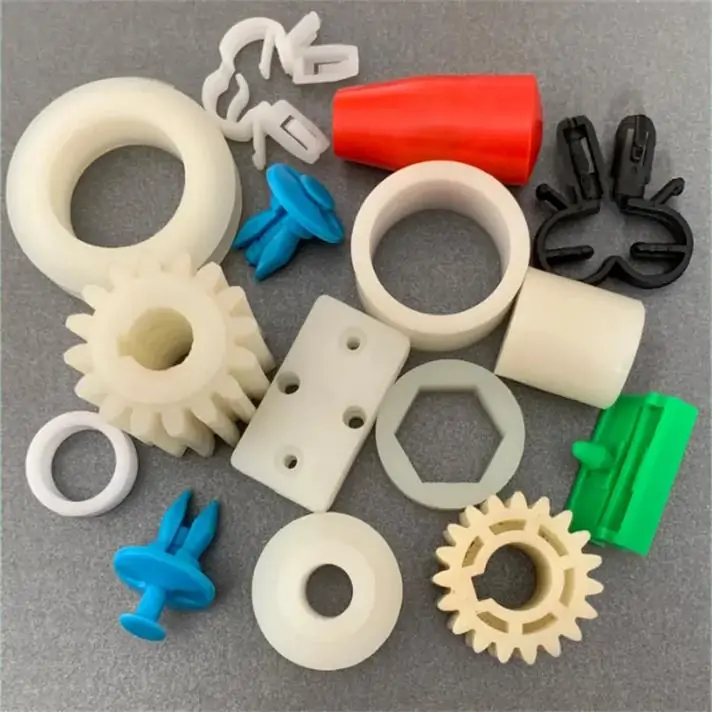
Applications of ABS Injection Moulding
ABS plastic injection moulding finds extensive use across the automotive, electronics, home appliance, and toy industries.
Automotive Industry
Requires low-temperature resistance and high part density, used for manufacturing interior trim, instrument panels, and vehicle exteriors.
Electronics Industry
Demands high precision and flawless appearance, commonly employed in producing mobile phone casings, television panels, and appliance housings.
Home Appliance Industry
Emphasis on surface gloss and impact resistance, such as electric fan housings and rice cooker casings.
Toy Industry
Requires aesthetically pleasing surface gloss for plastic toys, sports equipment, and similar products.
Common ABS Grades and Models
ABS can be categorized by performance into: General-purpose grade, Transparent grade, Heat-resistant grade, Flame-retardant grade, Electroplating grade, and Transparent grade. Each grade possesses distinct characteristics. Below are representative brands, grades, and applications.
General-purpose Grade
Korea LG HI121H, HI100H; Taiwan CMO PA757, PA709. Used for helmets, appliance housings, etc.
Transparent Grade
Korea LG TR557, TR558A; Japan Toray 900, 920. Used for lighting housings, transparent appliance panels, etc.
Heat-Resistant Grade
Korea LG XR401, XR407E; Taiwan CMO 777B, 777D. Used for automotive interiors, appliance housings, etc.
Flame-Retardant Grade
Korea LG AF312 A/B/C; Taiwan CMO PA765 A/B. Used for chargers, sockets, switches, etc.
Precautions for ABS Injection Moulding
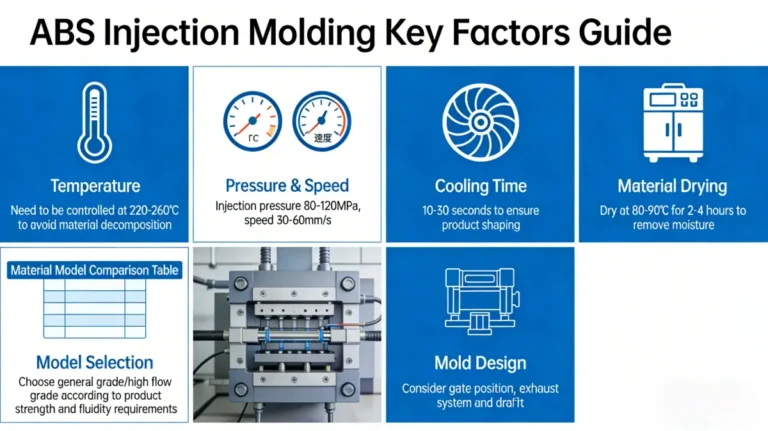
When using ABS injection moulding, multiple factors must be considered based on its properties, including temperature, pressure, speed, cooling time, material drying, mold design and model selection.
1. Temperature Control
Injection machine temperature: ABS injection molding temperature range typically falls between 210°C and 250°C.
Mold Temperature: Mold temperatures are usually set between 40°C and 70°C. Lower mold temperatures enhance surface quality and accelerate cooling rates.
2. Injection Pressure and Speed
Injection Pressure: Typically set between 80 MPa and 150 MPa to ensure complete material filling.
Injection Speed: Adjusted based on surface finish requirements and part complexity.
3. Cooling Time
Cooling time: Adequate cooling time ensures dimensional stability and surface smoothness of ABS parts.
4. Material Drying
Moisture-absorbing ABS material may cause bubbles, discoloration, or poor moulding during injection. Therefore, ABS requires drying before processing. Typically, ABS material is dried at 80°C for 2 to 4 hours.
5. Mold Design
Draft Angle: ABS is a highly fluid, rigid plastic. To ensure smooth part ejection, molds require a properly designed draft angle, typically 1° to 3°.
Runners Design: To prevent flow marks and bubbles in parts, mold runners should be designed uniformly and without dead corners.
6. Material Selection
Different grades of ABS possess distinct properties. Material selection should choose the appropriate ABS grade based on the part’s usage requirements.
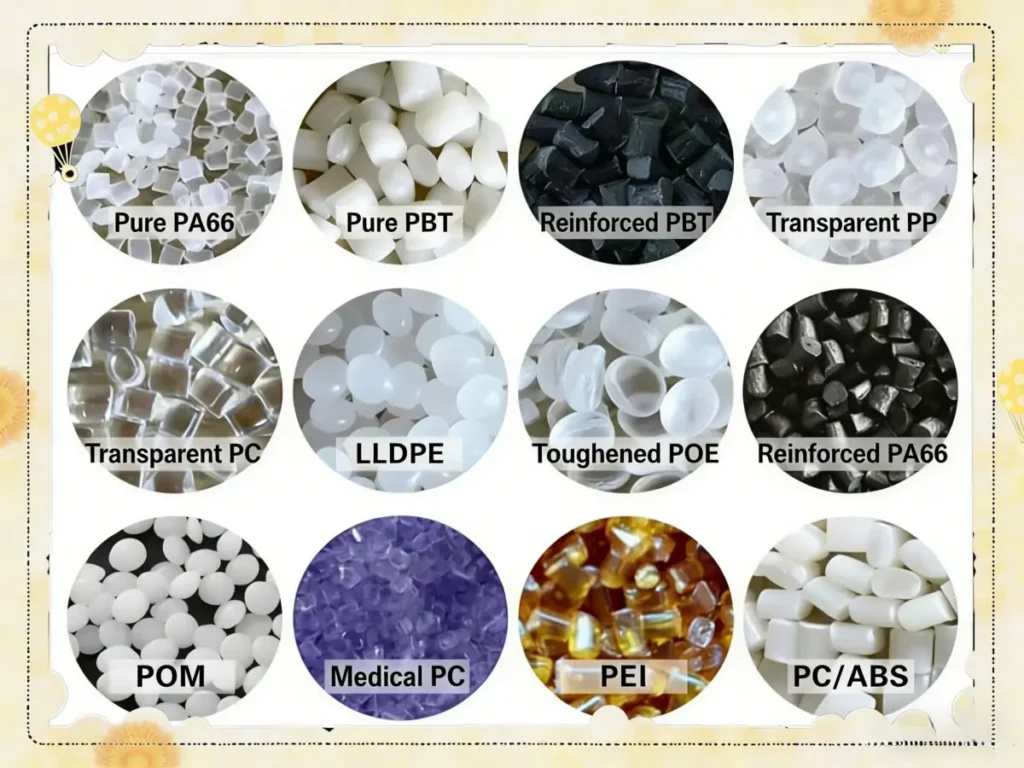
ABS replacement materials for injection molding
In certain specialized applications, the injection molding performance of ABS may not fully meet product functionality or compliance requirements. Consequently, manufacturers may consider alternative engineering plastics as substitutes. When selecting replacement materials, manufacturers must evaluate factors such as strength, heat resistance, chemical resistance, transparency, and processing difficulty. If you want to know more about injection molding materials, please click on this link: What Types of Plastic are Used in Injection Moulding?
Below are some common plastics similar to ABS:
1. Polycarbonate (PC)
Characteristics: Polycarbonate (PC) is a high-strength, highly transparent, impact-resistant, and heat-resistant plastic with properties close to ABS, but superior in strength and heat resistance.
Applications: Safety goggles, automotive lamp covers, electronic product housings, and medical equipment.
Drawbacks: Higher cost, prone to surface scratches, susceptible to UV exposure.
2. Polypropylene (PP)
Characteristics: Polypropylene (PP) is a widely used thermoplastic with good chemical resistance and low density. Its impact resistance and strength are lower than those of ABS.
Applications: Packaging, appliance housings, automotive components.
Disadvantages: Lower heat resistance, poorer impact resistance.
3. Polystyrene (PS)
Characteristics: Polystyrene (PS) is a brittle, transparent plastic with good flow properties, suitable for low-cost products but unsuitable for applications requiring high impact strength.
Applications: Disposable tableware, toys, and household items.
Disadvantages: High brittleness, poor heat resistance, and low impact strength.
4. Nylon (PA)
Characteristics: Nylon (PA) offers outstanding wear resistance, chemical resistance, and mechanical strength, commonly used in high-load and long-term applications. Compared to ABS, nylon provides better heat resistance and strength but is more challenging to process.
Applications: Gears, automotive components, engineering applications.
Disadvantages: High moisture absorption requiring drying treatment; relatively high cost.
5. Polyoxymethylene (POM)
Characteristics: POM is an engineering plastic with exceptional rigidity, strength, and wear resistance, suitable for precision component manufacturing.
Applications: Precision components, automotive parts, gears, and sliding components.
Disadvantages: Relatively high cost; unsuitable for high-volume, low-cost production.
6. Thermoplastic Elastomer (TPE)
Characteristics: Thermoplastic elastomer (TPE) combines the flexibility of rubber with the processability of plastic, making it suitable for applications requiring elasticity and comfort.
Applications: Automotive seals, handles, soft-touch components.
Disadvantages: Poor chemical resistance, relatively high cost.
Conclusion
ABS, as an engineering plastic with excellent comprehensive properties and injection moulding capability, is widely used across various industries. However, in practical applications, companies must decide whether to use ABS based on specific product requirements, cost budgets, environmental standards, and other factors, while implementing necessary process optimizations during injection moulding.
The selection of appropriate materials not only enhances product quality but also reduces production costs and boosts market competitiveness. As a one-stop ABS injection molding manufacturer for overseas markets, we assist clients in balancing material selection, production costs, and delivery reliability within international supply chains. For further advice on ABS materials or other plastics, please contact us for professional support and tailored solutions.